

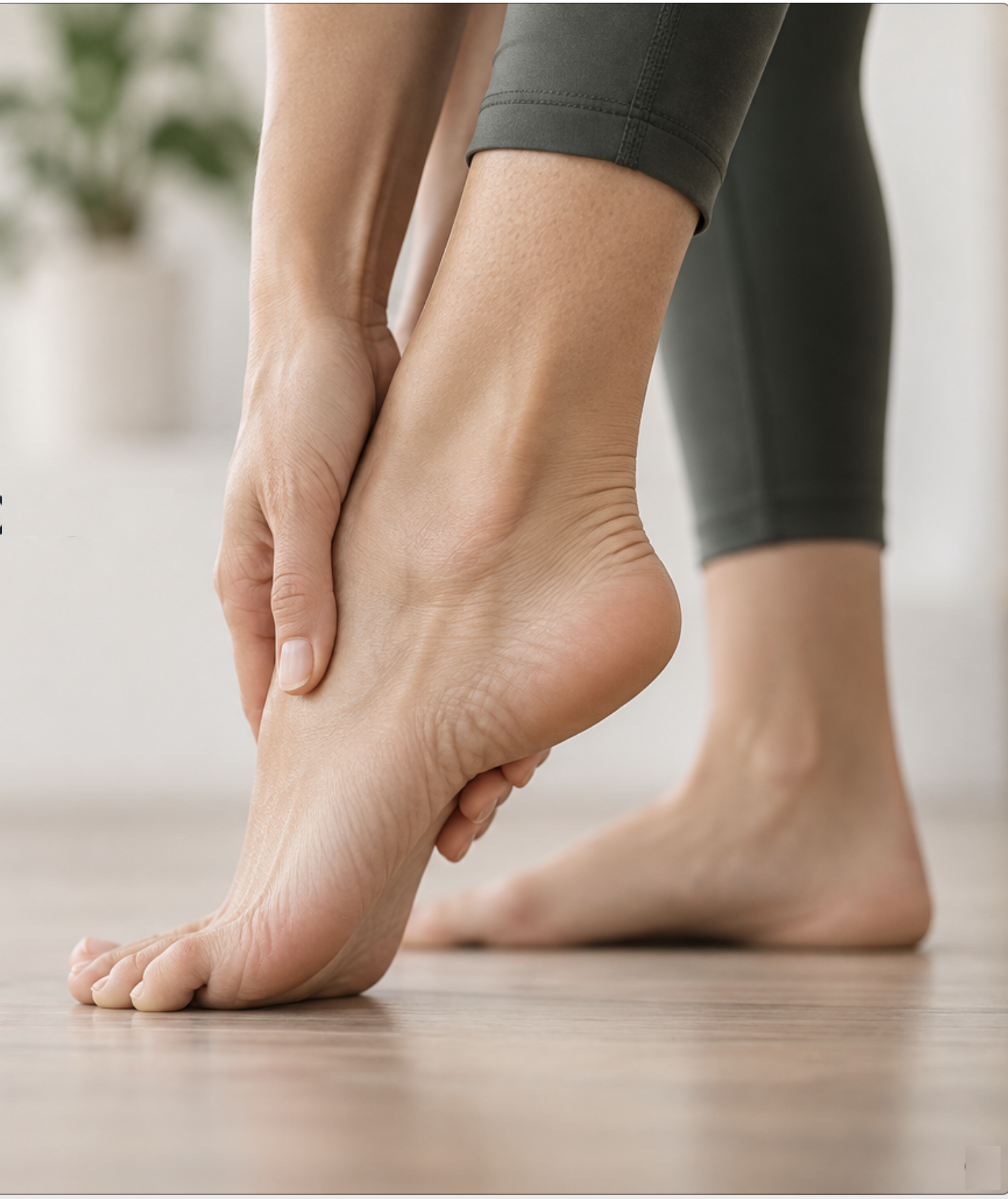
Plantar Fasciitis
Targeted acupuncture restores mobility by easing heel or foot pain and soothing inflamed tissue
Heel Pain Every Time You Step Out of Bed?
That first step in the morning can be brutal.
You get out of bed, put your foot down, and feel a sharp pain through your heel or the bottom of your foot. Maybe it loosens up once you start moving, only to come roaring back after a long day on your feet, a workout, or even sitting for a while.
If that sounds familiar, you may be dealing with plantar fasciitis, and it’s something we treat regularly at Acupuncture Northwest.
We use acupuncture, trigger point therapy, and other hands on treatment approaches to address both the painful area in your foot and the muscular tension and movement patterns that may be contributing to it.
What Is Plantar Fasciitis?
The plantar fascia is a strong band of connective tissue that runs along the bottom of your foot from your heel toward your toes. It helps support the arch of your foot and absorbs stress when you stand, walk, and run.
When this tissue becomes irritated, plantar heel pain can develop.
One of the classic signs is heel pain with your first few steps in the morning. You may also notice pain after sitting for a while, after exercise, or after spending a long time standing or walking.
And although you feel the pain in your foot, we don't just look at your foot.
That's the most important thing to consider!
Our Approach to Plantar Fasciitis
At Acupuncture Northwest, we take a holistic approach, which is why we get lasting results!
We'll evaluate your foot and heel, but we'll also look at what's happening above them, including your calf, ankle and lower leg.
Depending on what we find, your treatment may include:
Acupuncture
Trigger point acupuncture
Cupping or other soft-tissue techniques
Treatment of tight calf and lower-leg muscles
Guidance for stretching, movement and recovery
Recommendations for supportive at-home care
Our goal isn't simply to temporarily quiet the painful spot. We want to identify the factors that may be contributing to your symptoms and help your body recover.
Can Acupuncture Help Plantar Fasciitis?
Absolutely! This is something that we help people with daily! And it is so rewarding.
Having foot pain takes so much away from your quality of life and helping people get back on their feet and back to living is why we do what we do!
Clinically, we often use acupuncture not only around the painful area but also to address tight muscles and trigger points farther up the leg, we always say, you might feel it on the bottom of your foot but your calf muscles are very likely a major contributor to your pain.
The good news is we can work on all of the affected muscles at the same time, and get them to go from contracted and causing pain to relaxed and pain free.
What Does Trigger Point Acupuncture Feel Like?
Trigger point acupuncture is different from simply placing acupuncture needles around the heel.
When we identify a tight or irritated muscle that may be contributing to your symptoms, we may use a very fine acupuncture needle to target that area.
Sometimes the muscle responds with a quick involuntary twitch or release. Patients will occasionally say something like, “THAT'S the spot.” When your muscle goes from contracted to relaxed we get excited because we know you are going to feel better.
We love those moments because they can help connect the dots between where you're feeling pain and what may be contributing to it.
Not every patient needs trigger point treatment, and treatment is always tailored to what we find during your evaluation.
Common Plantar Fasciitis Symptoms
Plantar fasciitis commonly causes:
Sharp or stabbing heel pain
Pain with the first steps in the morning
Pain after sitting or resting
Pain after prolonged standing or walking
Tenderness along the bottom of the heel or arch
Symptoms that improve as you move and then return later
Difficulty running, hiking, exercising or comfortably staying on your feet
Heel pain can have other causes, however, so getting the right diagnosis matters.
We are able to elevate you and decide if your symptoms are muscular or if we think their might be something else going on. We will always be forthcoming because we are results oriented and what to make sure that you get better!
How Long Does Plantar Fasciitis Take to Get Better?
Honestly everyone is different, but we will work to help you heal as fast as your body can heal.
Someone who has had heel pain for three weeks may have a very different treatment plan than someone who has been dealing with it for two years.
At your first visit, we'll talk about how long you've been in pain, what makes it better or worse, what you've already tried, your activity level and what we find during your physical evaluation.
From there, we'll recommend a treatment plan based on you.
Our goal is always to help you make meaningful progress while giving you a clear understanding of what we're doing and why. The goal is to get you out of pain and back to doing what you love, not to keep you in our care.
I've Already Tried Everything. Is It Still Worth Coming In
Yes! This is actually when we see a lot of people.
Many of our patients come to us after they've already tried stretching, massage, different shoes, orthotics, physical therapy, chiropractic care, rest or other treatments.
That doesn't mean those treatments were wrong or that acupuncture is some magic answer.
Sometimes finding and treating a muscular component that hasn't been addressed can be an important piece of the puzzle. Acupuncture is very good at treating things that dont seem to have great answers. We see this all of the time. Patients say “I tried everything and you were my last stop, I should have come here first! “
And again, if we don't think you're a good candidate for what we do, we'll tell you.
Frequently Asked Questions About Plantar Fasciitis & Acupuncture
Where do you put acupuncture needles for plantar fasciitis?
It depends on the individual. Treatment may include points in or around the foot and ankle as well as muscles of the calf and lower leg. If trigger points or muscular tension appear to be contributing, we may treat those areas as well.
Is acupuncture for plantar fasciitis painful?
Acupuncture needles are very thin. Sensations vary depending on the technique being used. Trigger point acupuncture can produce a brief twitch or stronger sensation when a tight muscle responds. We communicate with you throughout treatment and adjust the intensity to your comfort level. The last thing we want to do is scare you away, we make sure that you are comfortable.
Do I need to stop exercising?
Not necessarily. Your recommendations will depend on your symptoms, activity and what appears to be aggravating the tissue. Sometimes temporarily modifying an activity is more appropriate than stopping movement altogether.
Should I stretch my calves?
Calf stretching may be helpful for some people with plantar fasciitis, but your treatment plan should be individualized. More stretching isn't automatically better, particularly if something you're doing repeatedly is aggravating your symptoms.
Can plantar fasciitis go away on its own?
Many cases improve over time with conservative care, but plantar heel pain can persist for months or longer in some people. If it keeps returning or is interfering with your normal activities, it's reasonable to have it evaluated rather than continuing to work around the pain.
Do you treat chronic plantar fasciitis?
Yes. We regularly see patients with persistent musculoskeletal pain that has been bothering them, sometimes for years! Including people who have already tried other approaches before coming to Acupuncture Northwest.

Schedule your appointment online or reach out
We are open:
Mondays 10-5
Tuesdays 9-5
Wednesdays 10-5
Thursdays 8-7
Fridays 7-2
Saturdays 9-2
2262 N. Albina Ave. Suite #110,
Portland, OR 97227
Phone: (503) 493-9389
Fax: (503) 493-9082